
Colors in Action
Lights and music on a comic book page

Okay, Comics People. We put some respect on lettering a few weeks back. Colorists deserve the same, and this one has been a long time coming. In fact:
Comic book colorist have been my favorite comic book people lately (no offense to the rest of ya!).
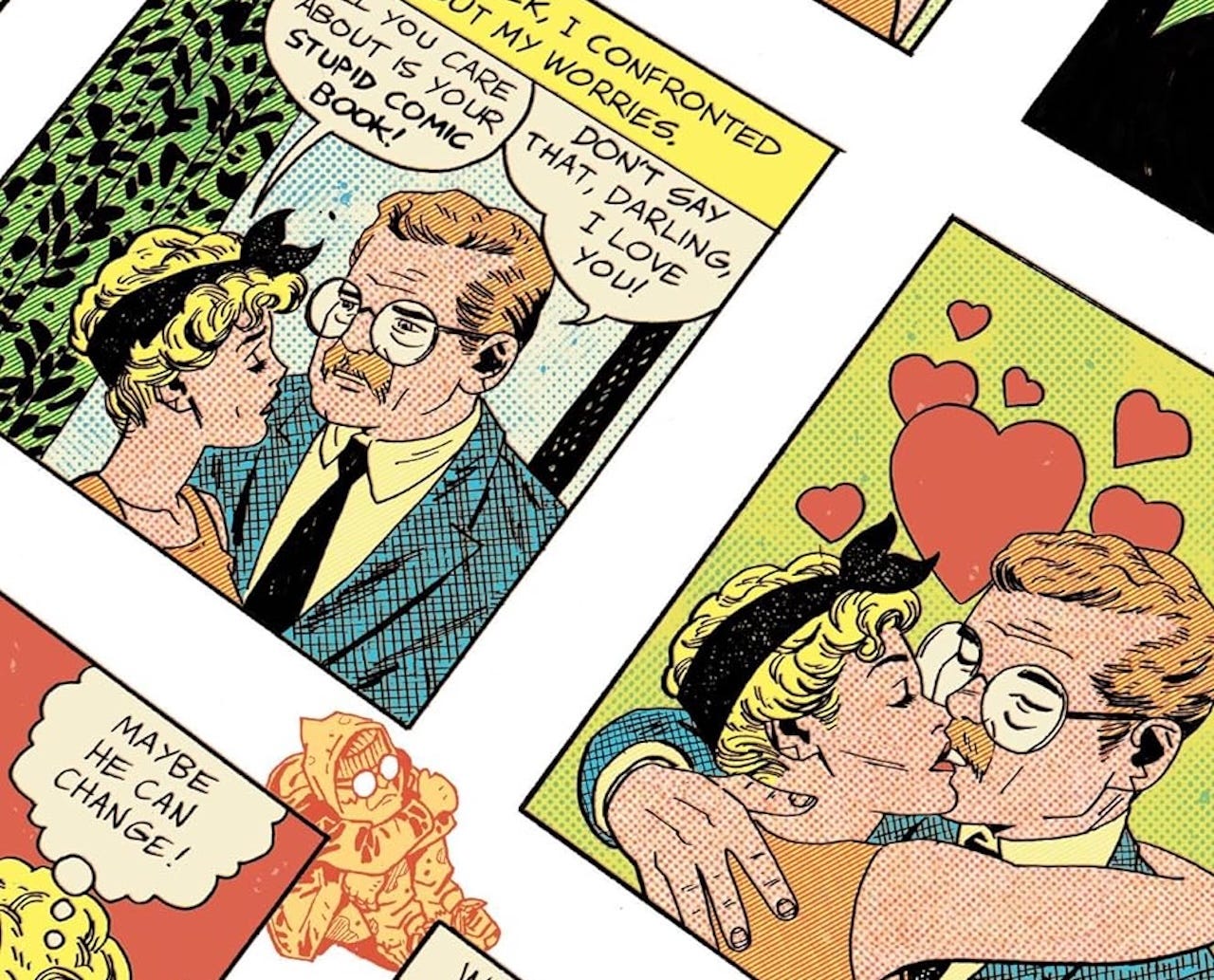
So let’s take a beat to appreciate the use of color in our funny books. Just don’t expect a history lesson… I mean, sure, it’s true that color in comics has come a long way since ben-day-dots on newsprint. It’s also true that those constraints presented all sorts of fun limitations for comics to build around. Artists today are even harkening back to those dotty days in awesome and inventive projects, paying homage to the OG process:
Such as Drome by Jesse Jonergan (2025):

And the incredible Assorted Crisis Events by Deniz Camp and Eric Zawadski, with a print edition of issue #8 which was all-too fittingly printed on old-school newsprint:
I’m not giving a history lesson here, I gotta reiterate this… But I’ll also point out that the history of using color in comics is yellow. It’s also blue. Because cool blue and hot orange are diametrically opposed on the color wheel and thus contrast perfectly.
Got it? If not, no worries. I took all this for granted while enjoying comics for a looong time, myself. Draw a line through the wheel to connect ‘em if you still didn’t get itL
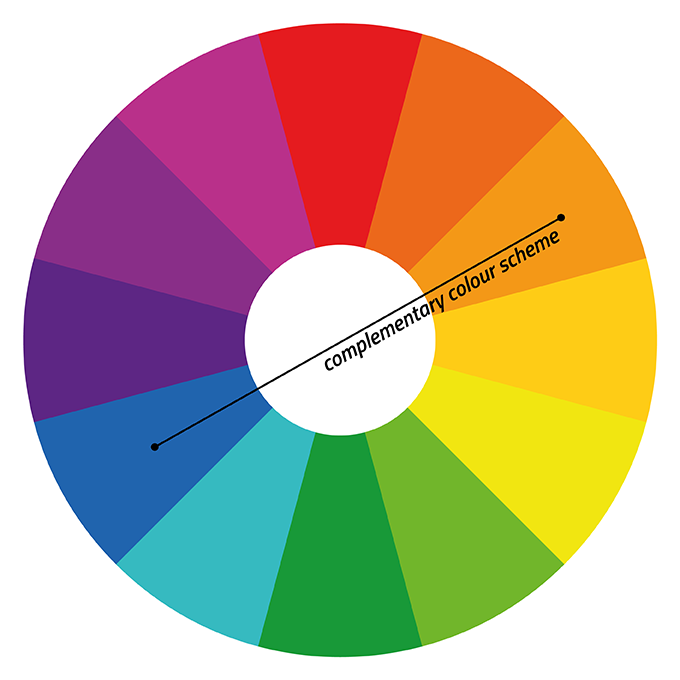
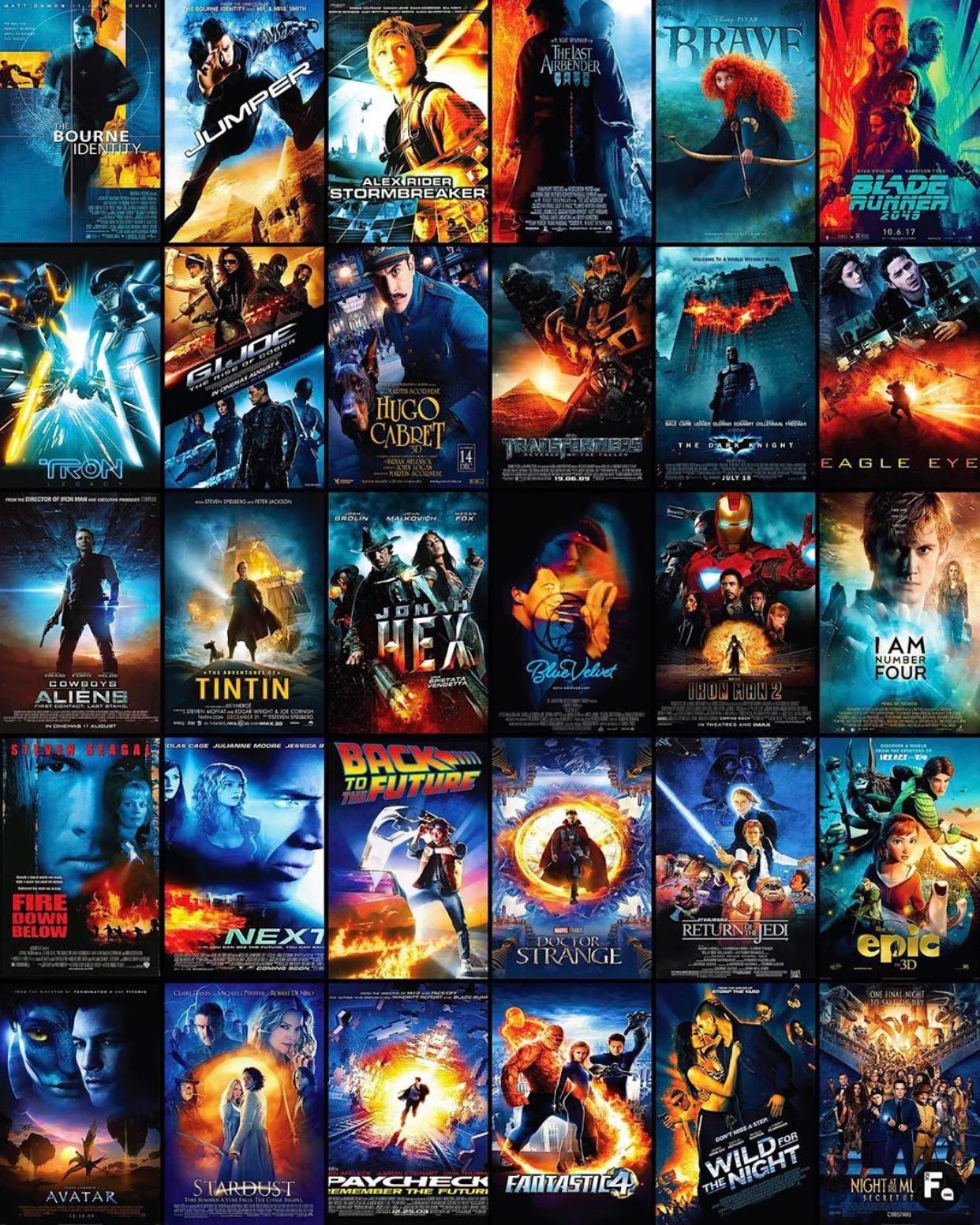
Opposites attract the eye, especially when we see the two of ‘em next to one another. The further around the wheel, the better the contrast and the more an image will ‘pop’. It’s actually kind of fun looking through some of your favorite imagery with an eye out for color contrast. Hulk is green with purple pants. Spidey and Superman are red and blue. Heck, Christmas is red and green, halloween is orange and purple. Another test? Go take a look at a bunch of movie posters and you’ll never unsee how slavishly they adhere to their blue and orange contrasts:
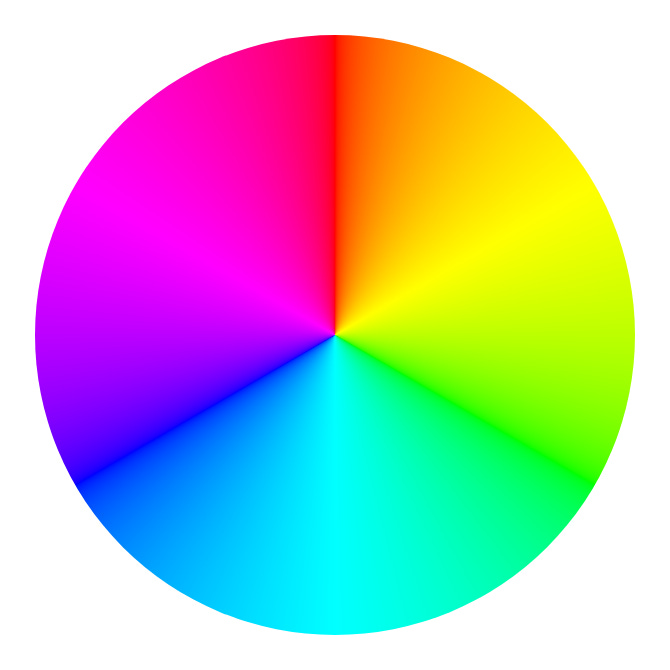
Pushing for contrast is just one general rule to help guide countless color decisions, and it was made all the more vital back in the newsprint days when color options were relatively limited. More recently, the migration to digital coloring tools has blown the doors off of some previous limitations. Suffice it to say that the color contrast wheel has gotten a lot bigger, with way more room for color gradation in the spaces between…
But digital coloring is an art with a million facets, and these techniques are largely mysterious to this comics dude, regardless of how much I admire ‘em. Which is why in this post I aim to SHOW the effect of a colorists’ decisions and craft, rather than even attempting to deep dive into exactly how they achieved such effect(s). The proof, as they say, has gotten into our damn pudding. It’s kinda hard to NOT notice it, so… lets.
Here’s the point: color artists play a massive role in comics storytelling. We ought to notice and appreciate their influence. Here are a few things to look out for:
Oftentimes, color artists establish a palette for specific books. David Aja (who often colors his own lines) comes to mind. Matthew Wilson is another color artist whose palette I can often recognize. Color artists like Aja and Wilson, who go hard on distinct palettes, are often the first colorist whose work you can’t help but notice:


More on colorist Matthew Wilson further below. But here’s a great interview with him discussing his work on Young Avengers (2013) and offering a ton of great insights re: his process, including in setting palettes for each specific tale.
Here are a couple of my favorite examples of comics with distinct and immediately recognizable color palettes:

David Aja (who usually colors over his own lines) built a tone on his Hawkeye run with writer Matt Fraction. Few Big Two capes books have ever looked so immediately distinct as Aja’s Hawkeye. This is an exceptionally good comic book. As a bonus: it’s also quite funny.
![Excerpt] One of my favourite parts about Matt Fraction and David Aja's Hawkeye run is how they use paneling to turn the very act of shooting a bow into an art form (](https://substackcdn.com/image/fetch/$s_!tKTj!,w_1456,c_limit,f_webp,q_auto:good,fl_progressive:steep/https%3A%2F%2Fsubstack-post-media.s3.amazonaws.com%2Fpublic%2Fimages%2Ffbecf9d4-7498-4b3f-a908-ec47157609d0_998x1072.png "Excerpt] One of my favourite parts about Matt Fraction and David Aja's Hawkeye run is how they use paneling to turn the very act of shooting a bow into an art form (")

Another artist who instantly springs to mind in the palette-setting department is Francesco Francavilla, who, as it happens, contributed some amazing covers for the Aja’s Hawkeye run. But the series in which Mr. Francavilla’s palette struck me most was that utilized within the subversive and amazing (and distinctly ORANGE)Afterlife with Archie:

![Mindblowing spread from Francesco Francavilla [Afterlife With Archie #6] : r/comicbooks](https://substackcdn.com/image/fetch/$s_!v7Po!,w_1456,c_limit,f_webp,q_auto:good,fl_progressive:steep/https%3A%2F%2Fsubstack-post-media.s3.amazonaws.com%2Fpublic%2Fimages%2F133057db-b086-4ba5-ab79-c6a41a229566_1080x809.jpeg "Mindblowing spread from Francesco Francavilla [Afterlife With Archie #6] : r/comicbooks")
But a colorist setting a palette isn’t always so blunt. Each story, scene or panel can have its own palette to fit a more granular moment or story beat. A palette doesn’t have to permeate throughout an entire story.
But even as artists use their line work to construct numerous settings, tones and worlds all their own, a great color artist can extend that line artist’s intent. Colorists can do more than extend intend, they can create wholly new tones and layers for a tale.
To illustrate this point, let’s look at some line artists then look at those same line artist’s work when colored by different color artists…
First up:
Steve Mcniven with color artist Justin Ponsor, from Captain America Vol. 6 #1 (2011):

Distinctly clean. Sharp.
Contrast time. Now here’s Steve Mcniven, the same fantastic line artist illustrating Cap above, but this time featuring the color work of Dean White:

A rough and hazy page from world distinctly lacking in all things clean and sharp, from Daredevil: Cold Day in Hell (2025). Here’s another:

Different stories being told. Different tones being explored. True.
But a fact is made clear in examples like this: colorists and coloring choices make a massive impact.
One description I’ve heard that rung true for me (pun intended) is that the colorist can be to a comic what a composer can be to a film. The color layer is a massive tonal layer. Much like a soundtrack adds feel and tone to each scene, so too does a colorist bring new depth to each panel. Indeed, even a cursory look at those two examples (Cap and DD) makes clear that each would feature utterly unique soundscapes, just as hundreds of combined color decisions convey to great effect.
Dean White, the colorist on that DD example, is one of my favorite in the game. His work was among the first that I singled out. Not the first colorist whose work I appreciated mind you, but until noting names like his I had been taking for granted the power and magnetic-draw the right colorist can add to a comic.
Dean White’s color work is often jaw dropping in its depth, making it impossible to deny. He’s as versatile as they come too, meeting the needs of not just each artist’s line(s), but the tonal needs of the individual story or scene. Case in point being those maligned-looking DD pages, which were tailored to fit that tale, which takes place in a future NYC that may be decayed beyond repair. Or, at least, that’s a question the reader may be left to ponder while taking in these colors.
Want some more proof that Dean White don’t play?
Here’s a page from Marvel’s Uncanny X-Force #14 (2011) featuring the fine-tuned pencils of Jerome Opena, immediately followed by those same panels featuring Mr. White’s colors:

Take a look at those pencils sans color again. Look at the water and tell me: could you tell there was ice floating on that water before seeing White’s color work? Opena’s level of detail is top shelf, but White’s ability to assess light and contrast to draw out that detail brings the panels into another stratosphere.
Dean White uses digital tools like Photoshop largely for the flatting process, where dominate colors and shades are applied as a base layer of color, to then be followed by the detail work including levels of gradation. He shared some fascinating details about his process in this interview with Justin Giampaoli via www.ElephantEater.com. The dude knows his stuff, read his own words via that link!
Here’s an example of White’s flatting process, once again over artist Jerome Opena’s pages from Uncanny X-Force:


White is a painter at heart, as he breaks down in that interview shared above, which I definitely suggest you give a read. So it’s interesting to see what happens when such color artists work with line artists who are also on the painterly side of the aisle…
And you know what? Speak of the devil! Here are two pages featuring Marvel’s Thor: God of Thunder, by a modern legend, Esad Ribic. This first page is colored by Ive Svorcina, who complements Ribic’s painterly style particularly well:

Ribic released each month’s issue of Thor: God of Thunder with impressive speed, considering his exceptional level of detail. But the color demands were so great that, as colorists, Ive Svorcina and Dean White took turns on issues. Here’s another page featuring Marvel’s Thor, also by artist Esad Ribic. But this time featuring color work by colorist Dean White. The effect of this pairing (Ribic and White) is notably different (from Ribic and Svorcina’s issues). Here’s one of White’s pages to illustrate what I mean:
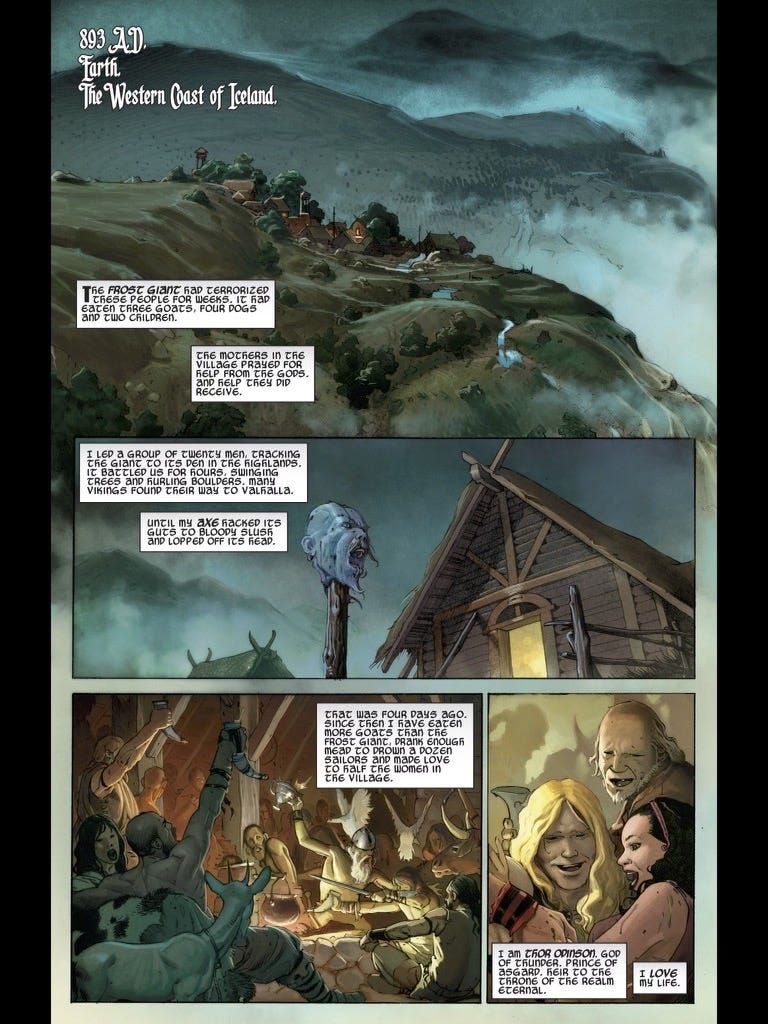
In this example, White’s color work seems to intentionally push back against Ribic’s painterly style a bit more than Svorcina. White effectively firms things up via (relatively!) vivid and firm colors. Both work extremely well over Ribic’s lines. But White tends to explore a bit wider color gradations. The result being that, for me, White’s feel firmer and more lived-in, while Svorcina’s pages feel more ethereal (which can be quite fitting as well, given the godly subject matter!).
I use this as an example because I picked up on who the colorists were as these two alternated, which was not something I was used to noticing. And that was despite these two colorists exploring the same zone and intentionally working to create visual continuity through an ongoing story. But distinctions are not always so subtle…
There’s nothing quite like a change in art teams to make a reader take inventory of the artists involved. Sometimes such drastic changes are just way too obvious to ignore.
Shoot. Let’s go from six to midnight with our ol’ godly buddy, and take a look at The Mighty Thor and the work of line artist Russell Dauterman as colored by colorist Matt Wilson:

Wilson was another colorists whose work caught my attention. Probably in no small part because his work with Russel Dauterman immediately followed Ribic’s work with colorists Dean White (and Ive Svorcina). By contrast to those two’s relatively washed out dreamscapes, Wilson’s color work with Dauterman’s lines is sharp and vibrant as it gets.
As a run on the comic that was also written by Jason Aaron, the choice for such color and vibrancy was a surely intentional change of pace. These color choices presented a vibrant juxtaposition with a purpose. The colors were featured in a story centering around a new Thor who was battling cancer, a reality which can mute the world, draining its color. These choices for primary vibrancy reinforce the buoyant, hopeful and battle-ready energy at this story’s core.


In some stories (and we’re taking a ride over to the Distinquished Competition here), color work can often be a central pillar in developing and communicating a story. Such is the case with artist / colorist Javier Rodreguiz’ work on D.C.’s Absolute Martian Manhunter. Mr. Rodreguiz does his own color work on that book, a series which serves as rather dramatic proof for how color work can be instrumental to comic book storytelling from top to bottom. Pages and panels like this really wouldn’t translate without the color:

And here’s another example from that book… Imagine how hard it would be for the eye to process everything on this page without the high color contrast to delineate objects (from Absolute Martian Manhunter #7):

Splashes of color.
Lights and music.
Colorists are awesome.
This comics person (me!) almost always gravitates to comics featuring color. I’ve come to learn that the color choices are a MASSIVE piece of that gravitational pull…
Last week I shared some freaky deaky color work by artist Nick Cagneti on his new book Spirit of the Shadows. I had never heard of this book until I found myself unable to resist the urge to grab it off the shelf at my LCS. It’s a fresh-off-the-press book with ALL the vibrant colors, subtle gradations and everything in between. Give it a listen…

Comics are cool.
Let’s get out there and enjoy ‘em. Ya know, when we’re not too busy—
Some fine examples here!